
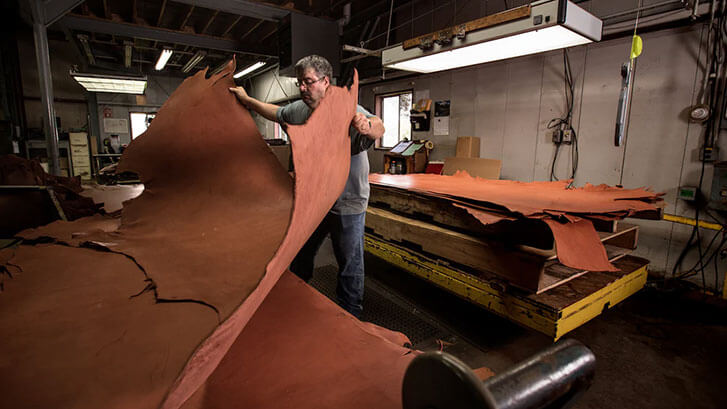
This material has supported human life for centuries. It protects, lasts, and performs better than most alternatives used today. Still, many buyers stop and ask an important question: how is leather made? That question links directly to trust, quality, and long-term value.
Once you understand the process behind every glove, shoe, or bag, it becomes clear that this craft is not rushed. It follows a detailed system shaped by skill, time, and controlled treatment of animal hide.
How Is Leather Made From Animal Skin
Cow hide remains the most common source due to strength, size, and availability. Sheep, goat, and crocodile skins are also used for specific product categories. These hides are by-products of the meat and dairy industry, meaning animals are not raised solely for this purpose.
Quality depends heavily on how the animal lived. Healthy livestock produce stronger skins, while scars, insect bites, or rough handling reduce usable yield. After removal, workers clean the hide immediately. Then, remove the remaining flesh by hand or machine to prevent drying and damage. Lastly, apply salt to stop decay until processing begins.
Cleaning, Soaking, and Splitting
Before the material takes shape, workers carry out deep cleaning. Workers soak the hide in water to remove salt and residue. They remove hair using lime solutions or manual techniques, which soften the surface and open the fiber structure.
After soaking, the hide thickens. Workers split it into layers. The top layer becomes full-grain material, valued for durability and strength. Manufacturers use the lower layers for everyday goods such as footwear and accessories. Each layer serves a clear function and reduces waste.
How Is Real Leather Made?
Tanning is the stage that prevents decay and gives the hide long-term durability. Without it, the material would break down naturally over time. This process stabilizes the fiber structure and locks in strength.
Hides move into large rotating drums filled with tanning solutions. Vegetable tanning uses natural tannins extracted from tree bark, producing firm results commonly used in furniture and luggage. Chrome tanning relies on mineral salts, creating softer, more flexible outcomes suited for apparel, gloves, and footwear.
Some manufacturers combine both methods to balance structure and softness. Oils are added afterward to improve flexibility and strength.
How Is Leather Made Step by Step After Tanning
After tanning, moisture remains. Workers remove it using rollers, then inspect and grade each hide. These grades determine how the material will be used.
Next, shaving creates uniform thickness. Shavings are reused in bonded products, minimizing waste. At this stage, chrome-tanned hides show a pale blue tone, confirming correct processing.
Re-Tanning
This step adjusts softness, fullness, and flexibility based on end use. The material returns to drums with selected agents, including vegetable extracts or chrome salts.
Fats and oils are added to enhance touch and durability. Once complete, excess moisture is removed again.
Drying
Dyeing adds color to the material. Workers place hides into drums with precisely measured dyes to ensure full penetration. Technicians monitor saturation throughout the process to prevent uneven results, then rinse and dry the material to lock in color.
Milling
Milling softens the surface further. Dried hides tumble inside drums without water, relaxing fibers and enhancing natural grain. This step is critical for comfort-focused products like footwear and gloves.
Dyeing
Color is added through dyeing. Hides are placed in drums with measured dyes for full penetration. Technicians monitor saturation closely to avoid patchiness. Afterward, the material is rinsed and dried again.
Finishing
Finishing determines final appearance and protection. Stretching machines soften the surface while oils maintain flexibility. Sprays may add matte, gloss, or textured effects and improve resistance to wear.
Full-grain surfaces usually avoid heavy coatings and instead receive heat ironing for a natural sheen. After curing, the material rests before product manufacturing.
Is 100% Genuine Leather Real Leather?
Yes, it comes from animal hide. However, quality varies by grade. Full-grain ranks highest, while “genuine” often refers to lower layers. Understanding labels helps buyers choose wisely.
Is Leather Made From Plants?
Traditional forms are not plant-based. While alternatives exist, they do not match the strength or lifespan of animal hide. Vegetable tanning uses plant extracts, but the material itself still comes from animals.
