
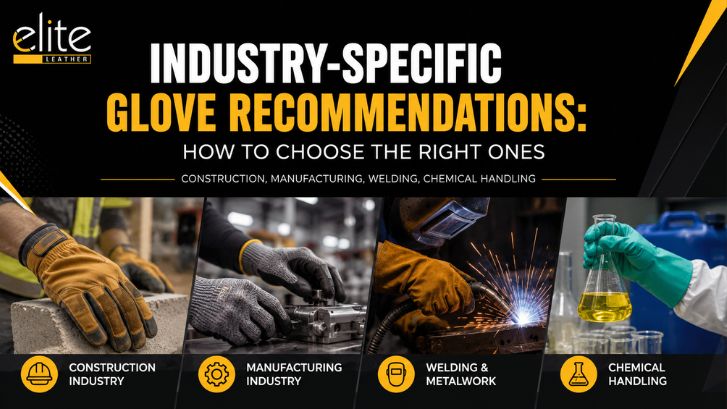
Your hands help you earn a living every single day. Even one wrong choice can lead to a painful injury that affects your work and daily life. That is why industry-specific glove recommendations matter. Every workplace comes with different risks, and the right hand protection helps reduce those risks before accidents happen. Whether you work in construction, healthcare, manufacturing, food processing, or welding, your protective gear should match the job.
The right choice improves comfort, supports better performance, and keeps your hands safe throughout the day. In this guide, you will discover practical industry-specific glove recommendations, learn what to consider before buying protective gloves, and understand how choosing the right safety equipment creates a safer workplace.
Why Choosing the Right Gloves Matter
Every job places different demands on your hands. Some workers handle sharp tools, while others work with chemicals, heat, or heavy materials. Because of this, using the same protective equipment for every task does not make sense.
The right gloves lower the risk of cuts, burns, punctures, and skin injuries. It also helps workers perform tasks with better grip and confidence. As a result, they stay focused on their work instead of worrying about possible injuries.
Following industry-specific glove recommendations also helps employers improve workplace safety while reducing downtime caused by accidents.
How to Choose the Right Protective Gloves
Before buying any safety equipment, start by understanding your work environment. Every workplace has different hazards, so your protection should match those risks.
First, think about the materials you handle each day. Sharp objects require cut-resistant protection, while high temperatures call for heat-resistant products. Likewise, chemical handling demands materials that resist harmful liquids.
Next, choose the correct size. A comfortable fit improves movement and reduces hand fatigue during long shifts. If protective gloves feels too loose or too tight, workers may struggle to complete simple tasks safely.
Finally, consider durability, grip, comfort, and quality. Good equipment protects your hands while lasting longer under daily use.
Industry-Specific Glove Recommendations for Different Workplaces
Choosing suitable gloves becomes much easier when you understand your workplace hazards. Below are some practical industry-specific glove recommendations for common industries.
Construction Industry
Construction workers deal with rough surfaces, heavy tools, bricks, steel, and changing weather conditions. Therefore, they need strong protection that can handle demanding tasks.
Leather work gloves remain a trusted choice because they offer durability, comfort, and excellent grip. For jobs involving power tools or heavy lifting, impact-resistant gloves provide extra protection against unexpected knocks.
Choosing reliable PPE allows workers to perform physically demanding tasks with greater confidence while reducing hand injuries.
Manufacturing Industry
Manufacturing environments often involve machinery, metal parts, and repetitive work. Workers need protection that offers both safety and flexibility.
Cut-resistant gloves help reduce injuries without limiting movement. This allows employees to handle tools, equipment, and products with greater precision throughout the day.
Regular inspections also help ensure protective equipment continues to perform as expected.
Welding and Metalwork
Heat, sparks, and molten metal create serious hazards for welders. Therefore, workers need protective equipment designed for high temperatures. Heavy-duty
leather PPE offers excellent resistance against heat while protecting both hands and wrists. It also provides long-lasting performance in demanding work environments.
Workers should replace damaged protective gear immediately because worn materials cannot provide the same level of safety.
Chemical Handling
Workers who deal with chemicals need protection that can resist harmful substances. Basic gloves cannot provide enough safety in these environments.
Chemical-resistant protective equipment helps reduce the risk of skin burns, irritation, and direct contact with dangerous liquids. Since every chemical reacts differently, workers should always check the manufacturer’s recommendations before selecting suitable PPE.
Common Mistakes to Avoid
Avoid these common mistakes when choosing and using gloves:
- Choosing protective equipment based only on price instead of workplace hazards.
- Wearing gloves that feel too loose or too tight.
- Using damaged PPE with tears, worn stitching, or weak areas.
- Ignoring regular inspections before starting work.
- Using the same protective equipment for every job, regardless of the risks.
- Skipping the manufacturer’s instructions before selecting PPE.
How to Extend the Life of Your Gloves
You can make your protective equipment last longer by following these simple practices:
- Inspect your PPE before every shift for signs of damage or wear.
- Clean reusable products according to the manufacturer’s instructions.
- Remove dirt, oil, and chemicals after each use.
- Store protective equipment in a cool, dry place away from direct sunlight.
- Replace damaged or worn PPE immediately instead of continuing to use it.
- Handle and store your gloves carefully to maintain its performance.
Conclusion
Your hands deserve the right protection every day. Therefore, follow industry-specific glove recommendations, choose PPE that matches your work, and replace damaged equipment without delay. Small decisions today help prevent serious injuries and keep every workplace safer tomorrow.
