
A worker grinding a metal component faces flying particles, while someone handling cleaning chemicals risks splashes and skin exposure. An electrician, meanwhile, needs protection against electrical hazards. Giving all three workers the same protective gear would leave significant gaps in workplace safety.
Choosing the right **safety equipment** starts with understanding what could cause an injury, how exposure might occur, and which protective measures suit the task.
What Is Personal Protective Equipment (PPE)?
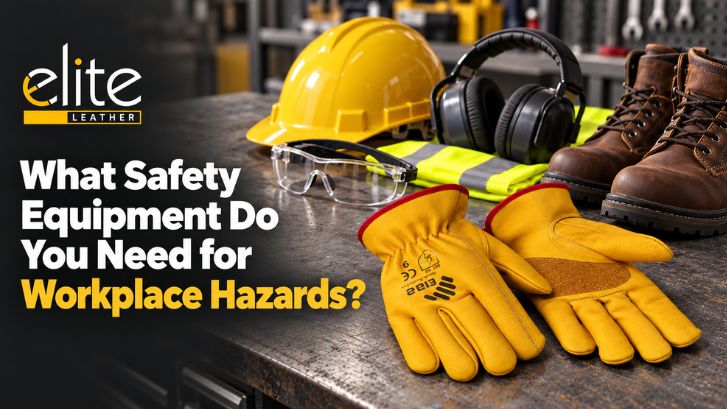
Personal Protective Equipment (PPE) includes items workers wear or use to reduce exposure to workplace hazards. Depending on the job, this may include helmets, protective eyewear, gloves, safety footwear, respirators, hearing protection, and specialized clothing.
But PPE is not the only aspect of workplace safety. Employers should prioritize eliminating hazards, substituting safer materials, and introducing engineering controls such as machine guards and ventilation.
Essential Safety Equipment Categories for Different Workplace Hazards
Equipment used will vary depending upon materials, machinery and conditions. These categories are useful as a framework to evaluate workplace protection.
1. Head, Eye, and Face Protection
Falling objects, flying debris, sparks, and chemical splashes can cause serious injuries during routine operations. Select protection according to the hazard rather than assuming one item covers every risk.
- Safety helmets: Help protect against specific impact and falling-object hazards when the helmet suits the application.
- Safety glasses: Protect the eyes from certain flying particles and debris.
- Protective goggles: Provide a closer fit for hazards such as dust or chemical splashes, depending on their design.
- Face shields: Add protection against certain splashes, sparks, and flying particles. For impact hazards, workers may also need suitable safety glasses or goggles.
For example, a face shield alone may not provide adequate eye protection against flying particles. Workers should use the equipment combination specified for the task.
2. Hand and Arm Protection
Hands come into contact with sharp edges, rough materials, hot surfaces, chemicals, and tools during the workday. Choosing safety gloves therefore requires an assessment of the hazard, not simply a comparison of material, thickness, or price.
Consider these common options:
- Leather work gloves: Use for material-handling jobs that require abrasion resistance and durability.
- Cut-resistant gloves: Help reduce cut injuries when their tested performance matches the sharp-edge hazard.
- Chemical-resistant gloves: Must be appropriate for the chemical, concentration, and anticipated contact time.
- Heat-resistant gloves: Provide protection against defined thermal hazards within their specified limits.
- Electrical insulating gloves: Protect against electrical hazards when correctly selected, tested, and maintained for the application.
3. Foot, Hearing, and Respiratory Protection
Some workplace hazards affect areas that gloves and helmets cannot protect. Heavy components can injure feet, machinery can expose employees to excessive noise, and dust or airborne chemicals can affect breathing.
Depending on the risk assessment, workers may need:
- Safety footwear with suitable toe protection, slip resistance, or other features for the working environment.
- Earplugs or earmuffs selected for the noise exposure and the required level of hearing protection.
- Respirators with suitable filters or cartridges for the identified airborne hazard, along with fit testing where required.
- Protective clothing, such as aprons or coveralls, designed for the relevant heat, splash, dust, or mechanical exposure.
Respiratory protection needs particular attention. A mask designed to filter particles does not automatically protect against gases or vapours; the equipment must match the contaminant and exposure.
What Safety Gloves Do Electrical Workers Need?
Electrical work requires specialized protection because contact with energized components can cause severe injury. Safety gloves electrical workers use must provide suitable insulation for the voltage and working conditions, in accordance with applicable standards and procedures.
Ordinary leather gloves do not provide electrical insulation. Qualified personnel may use purpose-designed insulating rubber gloves with leather protectors where the applicable system requires them. They must also follow the required inspection and testing procedures, since damaged or unsuitable insulating gloves can compromise protection.
At Elite Leather Creations, we encourage industrial buyers to assess glove requirements according to the intended application. For general handling, fabrication, or other mechanical tasks, consider grip, abrasion, cuts, and dexterity separately.
How to Choose and Maintain Workplace Protective Gear
Before ordering site safety gear, use the following checklist to compare products and establish a consistent approach to workplace protection.
- Identify the hazard: Review each task, the materials involved, and how employees could be exposed.
- Check product specifications: Ensure it is the right product for the intended use, protective ratings and relevant compliance testing.
- Assess fit and compatibility: Make sure equipment fits correctly and works with other protective items.
- Train employees: Explain how to wear, use, inspect, clean, and store each item, including its limitations.
- Inspect and replace: Follow manufacturer guidance and applicable requirements; remove damaged or defective equipment from service.
- Review changing conditions: Reevaluate protection when employees change tasks, materials, machinery, or work environments.
These principles apply to manufacturing, construction, warehousing, and maintenance for buyers who are researching safety equipment in Pakistan. Look for products that are suitable for the hazard rather than just price or appearance.
FAQs
Q1: What safety equipment should industrial workers use?
A: The right equipment depends on the hazard, but most industrial workers need a hard hat, safety glasses, hearing protection, protective gloves, safety footwear, and high-visibility clothing. Respiratory protection and face shields apply when dust, fumes, or splashes are present. Therefore, a workplace risk assessment should always guide the final selection.
Q2: How often should workplace protective equipment be inspected?
A: Workers should inspect their equipment before every use or shift, checking for cuts, cracks, thinning, and worn stitching. Supervisors should also run scheduled formal inspections, following manufacturer guidance and the level of risk. As a result, damaged items leave service before they fail on the job.
Q3: Can one pair of gloves protect against cuts, heat, and electricity?
A: Yes, cowhide is commonly used in welding gloves for its durability. However, the right pair depends on your welding process and protection needs. At ELC, we recommend checking the glove’s heat protection, seam construction, cuff coverage, and applicable safety standards. Our Cobalt welding gloves list EN 388 for mechanical risks and EN 407 for thermal risks.
Q4: Does PPE eliminate workplace hazards?
A: No, PPE reduces the risk of injury but does not remove the hazard itself. It serves as the last line of defense, after elimination, substitution, engineering controls, and safe work procedures. However, when workers choose the correct fit and rating, PPE remains a critical layer of protection.
