
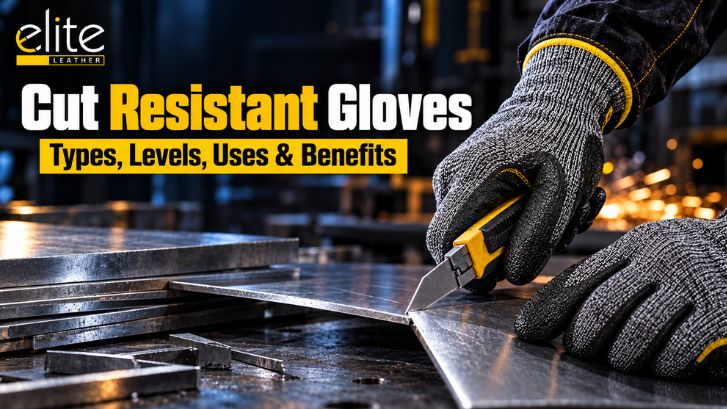
Sharp tools, sheet metal, glass, blades, and rough materials can cause serious hand injuries at work. The right cut resistant gloves add a layer of protection between your hands and these hazards.
However, not all offer the same protection. Their material, design, grip, flexibility, and test rating can all affect how well they protect your hands. Knowing these differences can help you choose the right one that fits the job.
What Are Cut Resistant Gloves?
They are safety handwear designed to protect hands from injuries caused by sharp objects. They are made with strong materials such as high-performance fibers, metal blends, leather, and protective coatings.
They are not completely cut-proof. Instead, they make it harder for a sharp object to reach the skin, helping reduce the risk of injury.
The right option depends on the work. For example, a worker handling cardboard may need less cut protection than someone handling sheet metal, glass, or sharp machine parts.
How Cut Protection Works
Cut protection gloves use strong materials and special construction to make it harder for sharp objects to pass through them.
Some options use high-performance fibers that provide strong protection while keeping the glove light and flexible. Others combine these fibers with materials such as glass or metal for jobs with higher cut risks.
Glove coatings can also improve grip. This is especially useful when workers handle smooth, oily, or wet materials.
Leather can provide another layer of protection against rough materials, cuts, and abrasion.
This means the best ones aren’t always the thickest or strongest. You need a glove that provides enough cut protection while still allowing you to grip tools and move your fingers properly.
Types of Cut Resistant Gloves
High-Performance Fiber Gloves
They use fibers that deliver a high strength-to-weight ratio. They are frequently used for assembly, automotive, manufacturing, and material handling applications where protection and dexterity are essential.
Coated Gloves
They have a coating such as nitrile, latex, or polyurethane on the outside. The coating improves grip and can make it easier to hold materials securely.
Leather Gloves
They are known for their strength and durability. They can protect hands from rough materials while also providing good abrasion resistance. Some leather gloves have a cut-resistant liner inside them for added protection.
Metal-Reinforced Gloves
Some high-risk jobs require handwear with metal reinforcement or other strong protective materials. They provide a high level of protection, but they may be less flexible than lighter designs. Select them based on the job and the amount of hand movement required.
ANSI vs EN 388 Cut Resistance Ratings
Cut resistance ratings help you understand how a glove performs against blade-cut hazards, but ANSI and EN 388 use different testing methods and rating systems.
| Standard | Cut Resistance Rating | What It Measures | Highest Level | Key Point |
|---|---|---|---|---|
| ANSI/ISEA 105-2024 | A1–A9 | Cut resistance is based on the force required to cut through the material. | A9 | Higher numbers indicate greater cut resistance. |
| EN 388 | A–F for ISO 13997 cut resistance | Cut resistance is based on the force required to cut through the material. | F | Higher letters indicate greater cut resistance. |
Under ANSI/ISEA 105-2024, cut resistance is rated from A1 to A9. A higher number indicates that the material can withstand a higher cutting force.
A simple breakdown is:
- A1–A3: Lower cut hazards
- A4–A6: Higher cut hazards
- A7–A9: Very high cut hazards
EN 388 covers several mechanical risks, not just cuts. Its marking can include ratings for:
- Abrasion
- Blade cuts
- Tearing
- Punctures
- ISO 13997 cut resistance
- Impact, where applicable
The EN ISO 13997 cut test uses a letter rating from A to F, with F representing the highest level.
When comparing ANSI and EN 388, do not treat the two scales as direct equivalents. Their testing procedures and rating systems differ, so always check the complete test rating and the manufacturer’s specifications when selecting cut resistant gloves.
Common Industrial Applications
Protective handwear supports workers in many industries where sharp materials create hand hazards, including:
- Metal fabrication and sheet metal handling
- Automotive manufacturing and assembly
- Glass handling and processing
- Construction and installation work
- Recycling and waste handling
- Machinery and equipment maintenance
- Manufacturing and material handling
- Food processing where sharp tools create hazards
In each case, workers should also consider other risks such as abrasion, puncture, heat, chemicals, and impact.
Benefits of Using Anti-Cut Gloves
The right gloves provide several practical benefits:
- Reduced exposure to cuts: They create a protective barrier against sharp edges and tools.
- Better handling: A good grip helps workers maintain control of materials.
- Improved confidence: Workers can handle hazardous materials with greater assurance when they have appropriate protection.
- Task-specific protection: Different ratings allow employers to match protection to actual workplace risks.
- Greater durability: Some constructions also resist abrasion and tearing.
- Better productivity: Design that balance protection with dexterity can make detailed handling tasks easier.
How to Choose the Right Gloves
When selecting gloves, consider the complete work environment rather than focusing only on resistance. Check:
- The sharpness and type of material being handled
- The required ANSI or EN 388 rating.
- Grip requirements, especially in oily or wet conditions
- Required dexterity and finger movement
- Abrasion, tear, puncture, heat, or impact hazards
- Correct glove size and fit
- Manufacturer specifications and test results
- Whether the product remains in good condition during use
The strongest protection is not always the best choice if it prevents workers from controlling tools or materials properly.
Common Mistakes to Avoid
Workers and employers should avoid several common mistakes when selecting protective handwear:
- Assuming all protective handwear provide the same protection
- Choosing a rating without assessing the actual hazard
- Treating protective handwear as completely cut-proof
- Ignoring grip and dexterity requirements
- Comparing ANSI and EN ratings as though they use identical scales
- Continuing to use damaged or heavily worn handwear
- Ignoring other workplace hazards beyond cutting
Protect Your Hands With the Right Gloves
Choosing the right cut-resistant gloves starts with understanding the hazard, testing standard, required protection level, and working conditions. The best one provides enough protection while still letting workers grip, move, and handle materials properly.
At Elite Leather Creations, we understand that industrial hand protection must match the demands of the job. We focus on practical glove construction, durability, and reliable protection to help workers handle demanding tasks with greater confidence and control.
