
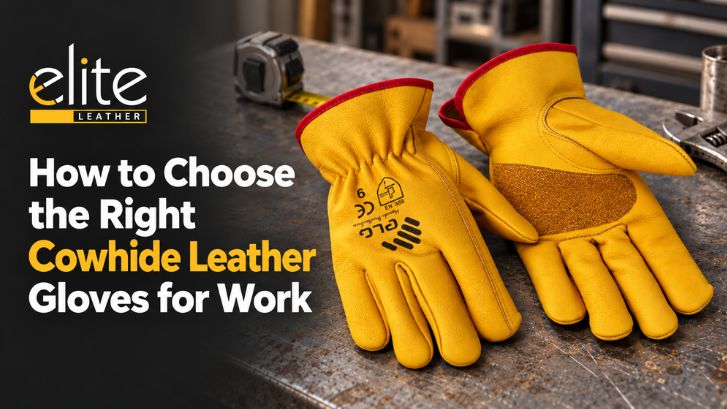
A glove may feel sturdy when you first try it on, yet prove uncomfortable or unsuitable after hours of handling metal parts, moving materials, or using tools. The important question is whether its construction, fit, and protective features match the demands of the job. That is why choosing cowhide leather gloves requires more than checking the leather type or price.
At Elite Leather Creations, we understand that the right glove must balance durability, comfort, grip, and the demands of the task. In this guide, we explain what to look for, how different leather constructions perform, and which features matter when selecting industrial hand protection.
What Are Cowhide Gloves?
Cowhide gloves are work gloves made from leather obtained from cattle hides. Manufacturers use different parts of the hide to create gloves with varying textures, flexibility, and durability, depending on the intended application. Grain cowhide has a smoother surface, while split cowhide has a rougher, fibrous texture.
These gloves are commonly used for industrial tasks that involve regular handling, friction, and contact with rough materials. However, their protection level depends on the glove’s design and tested specifications, not simply on the fact that it uses cowhide leather.
Is Cowhide Leather Good for Gloves?
Cowhide is commonly used in industrial gloves because it can offer a useful combination of durability and abrasion resistance. However, performance varies with leather quality, construction, fit, and the conditions in which workers use the gloves.
For everyday industrial use, cowhide suits tasks involving rough materials, tools, and repeated handling. However, leather alone does not guarantee protection against cuts, punctures, chemicals, or extreme heat. Always match the glove’s tested protective features to the hazards involved.
5 Factors to Consider Before Buying Cowhide Leather Gloves
1. Match the Glove to the Task
Start by asking, what task will you use them for? This question determines which features to prioritize.
For example, general material handling may call for durable leather and a secure fit, while detailed assembly requires better finger movement. Welding, on the other hand, demands suitable heat and spatter protection.
Before choosing a pair, identify:
- The materials workers handle
- The sharp edges, rough surfaces, or heat they encounter
- The grip and finger movement the task requires
- The duration and frequency of glove use
- Any additional hazards that require specialized protection
2. Understand Grain and Split Cowhide
Cowhide comes in different leather cuts, and the distinction affects glove performance.
| Feature | Grain Cowhide | Split Cowhide |
|---|---|---|
| Surface | Smoother outer leather | Rougher, fibrous inner layer |
| Common advantage | Good balance of durability and handling control | Rugged feel and useful abrasion resistance |
| Typical applications | General handling and some driver-style gloves | Heavy-duty work gloves and many welding designs |
| Selection priority | Surface feel, fit, and dexterity | Task demands, thickness, and required protection |
Neither option is automatically better. The right choice depends on the glove’s construction and intended use, not simply whether the leather has a smooth or rough surface.
3. Check Fit, Grip, and Dexterity
Even durable leather work gloves can become difficult to use if they fit poorly. Gloves that feel too tight may restrict movement, while excess material around the fingertips can interfere with handling small components.
Look for features that support the task:
- A secure fit around the palm and fingers
- Enough movement to operate tools safely
- Suitable grip for the materials being handled
- Cuffs that provide appropriate wrist coverage
- Comfortable construction for the expected duration of use
Whenever possible, workers should test the fit while performing representative movements.
4. Assess Construction and Protective Features
Leather quality matters, but stitching, seams, reinforcement, lining, and cuff design also influence glove performance. Gloves that face repeated friction need suitable construction in high-wear areas.
Before purchasing cowhide leather work gloves, review the manufacturer’s specifications and check whether the product has relevant test results or certifications for the hazards involved. Never assume that thicker leather automatically provides better protection against every risk.
5. Consider Maintenance and Replacement
Regular inspection helps you spot damage before it becomes a bigger concern. Check the palms, fingertips, seams, and cuffs for thinning, holes, loose stitching, or hardened and cracked leather.
Follow the manufacturer’s care instructions, and replace gloves when damage compromises their fit or protective function. Don’t keep using a worn pair just because the leather still looks intact.
What Should You Check When Buying Cowhide Leather Gloves?
When comparing leather cowhide gloves, use a consistent checklist to evaluate products fairly.
- Material: Confirm whether the glove uses grain cowhide, split cowhide, or a combination.
- Application: Check that the manufacturer recommends it for your intended task.
- Protection: Review relevant test ratings and specifications.
- Fit: Confirm the available sizes and required finger mobility.
- Construction: Inspect stitching, reinforcement, lining, and cuff design.
- Supplier information: Review product details and ask about testing, customization, or bulk-order requirements where relevant.
For buyers searching for cowhide leather gloves in Pakistan, the same selection principles apply: compare the glove’s specifications and suitability for the work rather than relying on price or material descriptions alone.
At Elite Leather Creations, we focus on industrial glove construction and product quality to help businesses evaluate hand protection according to their operational requirements.
FAQs
Q1: How long do cowhide leather gloves last?
A: The lasting of the gloves depends on the quality of the leather, glove construction, frequency of use, exposure to abrasion, heat or moisture, and maintenance. Inspect them regularly and replace them when wear, cracks, holes, or damaged stitching compromise their protective function.
Q2: Are cowhide gloves suitable for welding?
A: Yes, cowhide is a common choice for welding gloves because it resists heat, sparks, and spatter well. Thicker split cowhide suits MIG and stick welding, while softer grain cowhide supports finer control in TIG work. However, always confirm the glove carries a welding-rated certification before use.
