
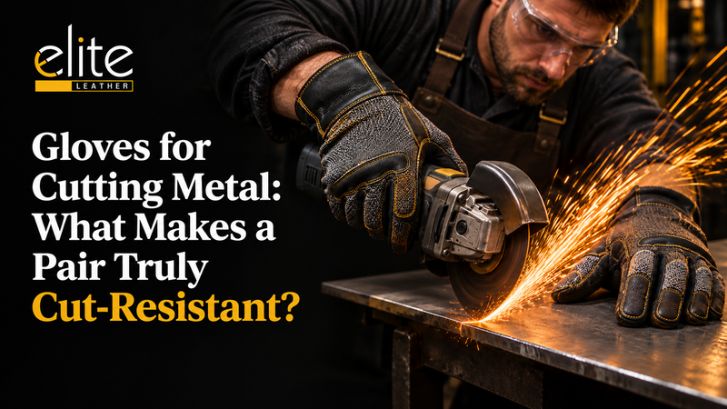
A glove’s outer material does not tell you how well it will resist a blade. When handling sheet metal, sharp-edged components or fabricated parts, the protective liner, tested cut rating, fit, and construction all affect performance. At Elite Leather Creations (ELC), our gloves for cutting metal include designs with tested liner ratings for handling sharp tools and metal parts.
A pair earns the term cut-resistant through tested performance against a defined cutting method. Thick leather, reinforced stitching or a rugged palm alone does not establish cut resistance. Buyers need to understand the rating, identify the workplace hazard and match the glove to the task.
What Makes a Glove Cut-Resistant?
Cut resistance usually comes from the fibres and materials inside a glove, rather than its outer surface alone. Manufacturers may use high-performance fibres or engineered yarns to create a liner that resists blade movement. Leather or coated materials can then provide grip, abrasion resistance and a durable outer surface.
For example, our ARCFLARE glove combines goatskin leather with a Nomex fabric back and an ANSI A5* cut-resistant liner. These materials serve different purposes: the liner provides the specified cut resistance, while the outer construction supports protection and handling.
When assessing cut resistant gloves, check these features:
- Tested liner: Look for a stated cut-resistance rating and the standard used to assess it.
- Protective coverage: Check whether the palm, fingers, and back of the hand receive the protection required for the task.
- Fit and dexterity: Gloves should allow workers to hold, move and position metal parts securely without excessive looseness.
- Grip: The palm surface should suit the material and working conditions, particularly when workers handle smooth or oily components.
- Seams and cuffs: Examine stitching, closures and cuff construction for suitable coverage and durability.
How Do Cut-Resistance Ratings Show Real Performance?
A cut-resistance rating gives buyers a measurable way to compare glove performance. However, different standards use different test methods, so their ratings should not be treated as interchangeable.
The ANSI/ISEA 105-2024 standard classifies hand protection by cut resistance on a scale from A1 to A9. A higher level indicates greater resistance under the standard’s testing conditions.
EN 388 uses a separate classification system. Its cut-resistance results include the Coupe Test and, where applicable, the TDM test associated with ISO 13997. The TDM method assigns levels A to F according to the force required to cut through the material. Level A starts at 2 newtons, while Level F represents 30 newtons or more.
EN 388 also assesses other performance areas, including abrasion, tear, and puncture resistance. These results matter because a glove with a strong cut rating may still offer limited protection against a different hazard.
Always check the complete test information rather than choosing a glove based on one number. A cut rating does not automatically establish puncture resistance, heat protection or suitability for every metalworking operation.
Which Features Matter When Handling Sharp Metal?
Metal fabrication involves different tasks, and each can expose workers to different hazards. Moving sheet metal, sorting cut components, and handling finished parts may require different levels of protection.
Before choosing a pair, consider:
- Edge sharpness: Freshly cut sheet metal and machined components can have sharp edges that expose hands to lacerations.
- Handling conditions: Smooth, oily, or heavy components can affect grip and control.
- Contact duration: Repeated handling can increase exposure to sharp surfaces and place greater demands on glove construction.
- Hand movement: Workers need enough dexterity to position parts without losing control.
- Additional hazards: Heat, sparks, chemicals, and impact require separate consideration. A cut rating does not automatically cover these risks.
For buyers sourcing Gloves for cutting metal in Pakistan, the applicable workplace requirements matter alongside product ratings. In Sindh, the Occupational Safety and Health Rules, 2019, specifically address glove selection according to workplace hazards. They call for tough materials and suitable reinforcement when workers handle sharp-edged or abrasive objects.
Are anti cut gloves Suitable for Every Metalworking Task?
No, the best gloves for cutting metal depend on the specific operation and the hazards workers face. A glove with a high cut rating may not provide the thermal protection needed for welding or the chemical resistance required when handling certain fluids.
For instance, ELC’s WELDFURY combines goatskin leather, a cowsplit back, an ANSI A4* cut-resistant liner, and fire-retardant material. This product-specific construction addresses more than one requirement, but buyers should still review the stated specifications and match them to their workplace conditions.
The right choice comes from assessing each hazard separately. Never assume that one glove can cover every metalworking activity.
Selecting Gloves for a Metal Fabrication Workshop
Consider a fabrication workshop in Karachi where employees transfer laser-cut steel sheets from storage racks to workbenches. The sharp edges create a laceration risk, while the weight and surface finish of the sheets affect grip and control.
The purchasing team should first identify the cutting hazard, then compare gloves with suitable tested ratings. It should also check palm grip, protective coverage, fit, and finger movement before approving a product for the task.
Are Cut-Resistant Gloves Reusable After a Minor Tear?
A tear can compromise a glove’s protective performance, even if the damage looks small. Workers should remove gloves from service when they find holes, exposed liners, damaged seams, or other defects that may affect protection.
Do not patch or repair damaged gloves unless the manufacturer provides an approved repair method. Instead, inspect gloves before each shift and follow the manufacturer’s care, cleaning, and replacement instructions. A glove’s previous cut-resistance rating does not guarantee protection after damage.
At ELC, we manufacture industrial gloves with different constructions and cut-resistance levels for varied workplace applications. Explore our cut-resistant glove range and compare each product’s liner rating, materials and intended use before making a purchasing decision.
*Authenticity test reports will be available upon request.
FAQs
Q1: Can I Use the Same Gloves for Welding and Handling Sharp Metals?
Q2: Does Thick Leather Make Gloves Cut-Resistant?
A: No. Thick leather provides durability and abrasion resistance, but cut protection depends on the glove’s tested liner and construction. Check its ANSI or EN 388 cut-resistance rating before purchasing.
