
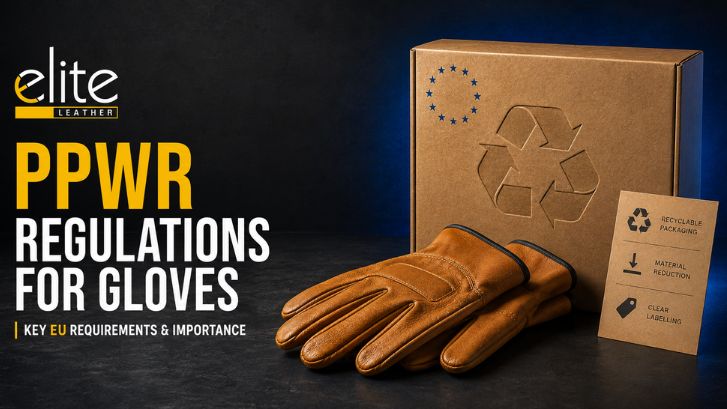
Packaging plays an important role in protecting gloves during storage, transport, and delivery. However, businesses selling gloves in the European Union must now consider new packaging rules alongside product quality and safety.
The PPWR Regulations for Gloves introduce requirements focused on reducing packaging waste, improving recyclability, and supporting a more circular system.
For glove manufacturers and exporters, understanding these requirements early can make decisions easier. It can also help businesses prepare for changing obligations when placing packaged products on the EU market.
What Is PPWR, and How Does It Affect Gloves?
PPWR stands for the Packaging and Packaging Waste Regulation, formally Regulation (EU) 2025/40. It establishes harmonized EU rules covering packing design, composition, waste prevention, recyclability, reuse, labeling, and extended producer responsibility.
The regulation entered into force on 11 February 2025 and applies from 12 August 2026. Therefore, businesses supplying packaged gloves to the EU need to understand the requirements that apply to their packing.
The PPWR does not affect the glove itself simply because it is a glove. Instead, it focuses on the packing placed on the EU market with that product.
For glove manufacturers, exporters, importers, and distributors, this means packing choices can become part of EU compliance planning. Retail boxes, plastic bags, cartons, transport packaging, and other components may need assessment under the regulation.
Key PPWR Requirements for Glove Packaging
The regulation introduces several requirements that can affect how businesses package and distribute gloves. Understanding these areas can help companies review their current systems.
1. Reduce Unnecessary Packaging
PPWR promotes waste prevention and requires businesses to consider whether the package uses more material than necessary.
For gloves, this means companies should review the size, weight, layers, and components of packing. Packing should protect the product without adding unnecessary material.
2. Improve Packaging Recyclability
The regulation sets requirements designed to make it recyclable and support the recovery of materials. Businesses should therefore consider materials and their compatibility with existing recycling systems.
This is particularly important when combining different materials. Simpler structures can make sorting and recycling easier.
3. Control Substances of Concern
PPWR requires packaging to minimize the presence and concentration of substances of concern. This requirement applies to materials and components.
Therefore, glove businesses should review specifications and supplier information to understand what materials and substances their packing contains.
4. Consider Reuse Requirements
PPWR introduces reuse targets for certain formats, particularly transport packing. Some requirements apply from 2030, including targets for reusable transport packaging used within the EU.
Businesses that ship large glove orders should therefore review how they use pallets, boxes, trays, wrapping, and other transport packaging.
5. Follow Packaging Information and Labeling Rules
PPWR also introduces harmonized requirements concerning labeling and information. These rules aim to help users understand packing characteristics and disposal.
However, the exact labeling obligations can depend on the type and the relevant implementation timeline. Businesses should check the applicable requirements before finalizing artwork.
PPWR Packaging Requirements for Gloves
The PPWR packaging requirements for gloves depend on the formats and materials used to place and transport the gloves on the EU market. A manufacturer should therefore assess each packing component rather than treating all as one category.
For example, businesses need to review:
- Individual glove packaging
- Retail boxes and cartons
- Plastic bags and protective films
- Shipping cartons
- Pallets and transport packaging
- Materials used for e-commerce shipments
- Labels and other components
This approach helps businesses identify which PPWR obligations apply to each part of their packaging system.
European Packaging Regulations for Gloves: Why Do They Matter?
The European packaging regulations for gloves matter because compliance can affect market access and supply chain planning. Under PPWR, packaging can only be placed on the EU market when it complies with the applicable requirements.
As a result, exporters should not wait until the shipment stage to review it. Instead, they should work with suppliers and EU business partners early to confirm material specifications, documentation, and applicable obligations.
PPWR Guidelines for Gloves: What Should Businesses Do?
The PPWR guidelines should be treated as part of a broader packing compliance process. The European Commission issued guidance in June 2026 to clarify selected provisions and support consistent implementation of the regulation.
Businesses preparing glove shipments can start with these practical steps:
- Identify every packing component used for gloves
- Record the materials used in each component
- Review weight, size, and unnecessary layers
- Check recyclability and material compatibility
- Review substances of concern in materials
- Keep relevant supplier and compliance documentation
- Monitor upcoming reuse, labeling, and recyclability requirements
- Confirm obligations with the relevant EU importer or compliance specialist
Why Glove Manufacturers Should Prepare Early
Packing changes can affect purchasing, production, labeling, warehousing, and shipping. Therefore, making changes early gives manufacturers more time to test alternatives and avoid last-minute supply chain disruptions.
At Elite Leather Creations, we understand that international glove supply involves more than manufacturing a quality product. Packaging, documentation, product requirements, and customer expectations all contribute to a reliable supply process.
